Pushing feed back within reach is the cheapest thing on this whole report. No extra feed, no extra equipment — just somebody driving the alley more often.
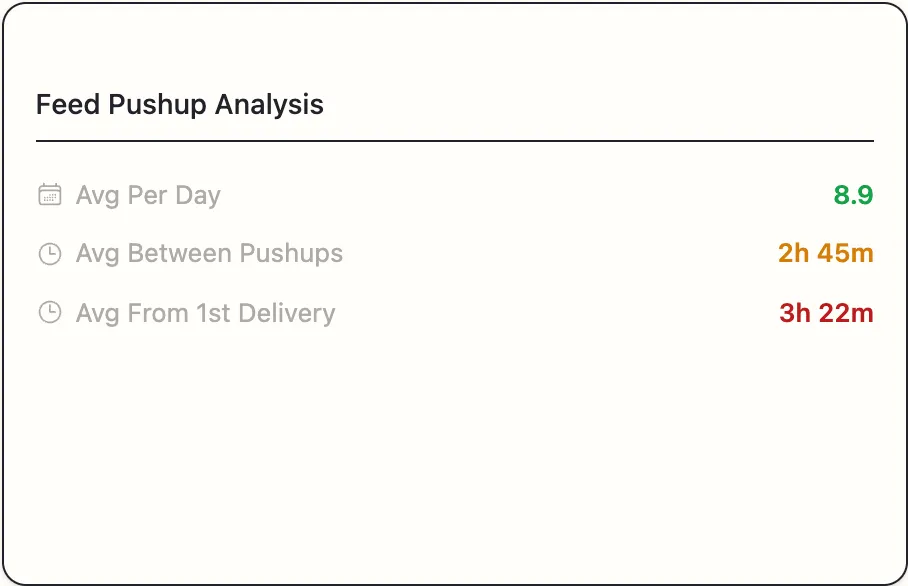
Avg Per Day
Average push-ups per day.
| Colour | Value |
|---|---|
| Green | 8 or more |
| Amber | 4 to 8 |
| Red | Under 4 |
Real-world herds run between about 4 and 12 a day. Eight is the green line because best practice is a push-up every one to two hours through the active part of the day.
The production difference is large. Herds with a routine push-up schedule have been recorded producing around 63.7 lbs a day against 55 lbs — more than 8 lbs of milk for something that costs diesel and a few minutes.
Avg Between Pushups
Average gap between one push-up and the next.
| Colour | Value |
|---|---|
| Green | 90 minutes or less |
| Amber | 90 minutes to 3 hours |
| Red | Over 3 hours |
Three hours is the line that matters biologically — cows should not go that long with feed out of reach.
This number and Avg Per Day can disagree in a useful way. A good daily count with a poor average gap means your push-ups are bunched together — several in a short burst, then a long empty stretch. That pattern usually shows up as a run of push-ups during the working day and nothing overnight.
Avg From 1st Delivery
Average time between the day’s first delivery and the first push-up after it.
| Colour | Value |
|---|---|
| Green | 30 minutes to 2 hours |
| Amber | Under 30 minutes |
| Red | Over 2 hours |
This is the one metric where too early is also flagged, which surprises people.
- Under 30 minutes — feed may not have been properly distributed yet. Pushing up immediately behind the mixer is often just moving feed that has not been eaten from.
- Over 2 hours — you have missed the peak. Cows eat hardest right after fresh feed arrives, which is exactly when they push it out of reach. A push-up two hours later is tidying up after the competition is over.
The sweet spot is half an hour to two hours after delivery.
Reading the card as a whole
- All green — push-up management is not your problem.
- Good count, long gaps — bunched push-ups. Spread them out, especially overnight.
- Good count, late first push-up — you are pushing up plenty but starting too late. Costs nothing to shift earlier.
- Low count everywhere — the highest-return fix available on this page.
Before you act on it
Push-ups are the events most often under-counted, because a push-up machine can look much like anything else driving the alley. If the count looks low against what you know you do, tag your feed vehicles and let the report re-check itself. It takes a minute and it usually moves the numbers.
Also worth reading alongside this card: Push-ups After Delivery, which shows whether each individual delivery got served, rather than an average across all of them.